

Rolex·25 August 2026·2 min read
The Datejust at eighty
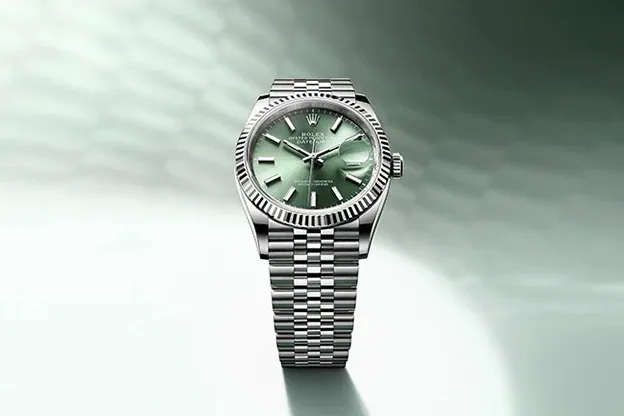
Made for the company's fortieth birthday in 1945, and barely altered since. The story of the first watch to put the date on the dial — and of a bezel that began life as a tool fitting.
Rolex turned forty in 1945, and Hans Wilsdorf marked it with a watch rather than a party. The Datejust was the first wristwatch to be self-winding, waterproof, chronometer-certified and to show the date on its dial, all at once. Each of those things existed separately. Nobody had put them in one case.
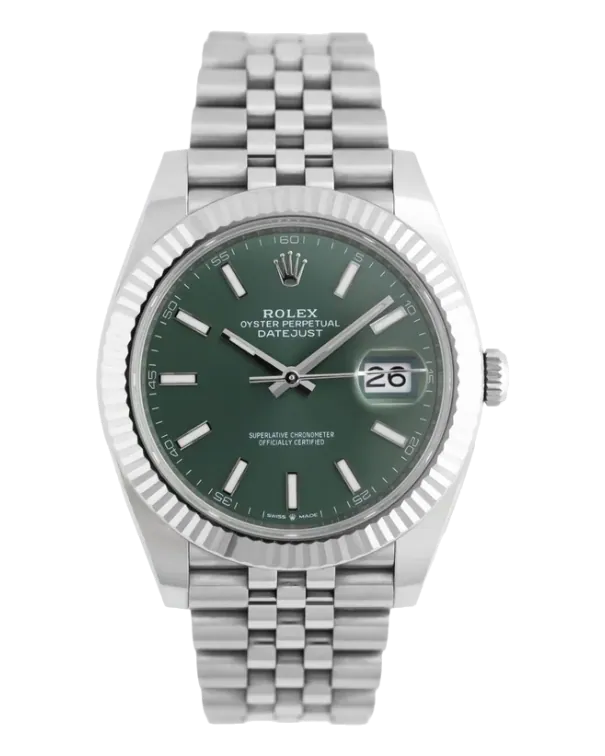
The first one, reference 4467, was yellow gold and 36 millimetres, and it arrived on a bracelet made for it: five columns of links, three of them polished, which the company named the Jubilee after the anniversary it was celebrating. Eighty years later that bracelet is still made, still called the Jubilee, and still the reason a great many people choose a Datejust over anything else.
The date itself took a decade to behave. On the earliest examples the disc crept round over the small hours, so that at half past midnight it sat somewhere between yesterday and today. By the mid-fifties the movement snapped it over at midnight instead, which is the behaviour every dated watch has copied since.
The Cyclops came in 1953, and the story Rolex tells is that Wilsdorf's wife complained she could not read the date. Whether or not that is true, the lens magnifies two and a half times, is bonded to the crystal rather than moulded into it, and is the single most recognisable thing the company has ever done. It is also the detail counterfeiters most often get wrong: the magnification is too weak, or the date is not centred beneath it.
The fluted bezel was not decoration either. Early Oyster cases were sealed by screwing the bezel down against the case, and the flutes were the grip a watchmaker's tool needed to tighten it. When the sealing moved elsewhere the flutes stayed, because by then they were what a Rolex looked like. A functional requirement had become a signature, which is a fair description of the whole watch.
The long middle of the story is the 1600 series, made from 1959 until the late seventies — the 1601 fluted, the 1603 with its engine-turned bezel, the 1600 smooth. These are the ones with acrylic crystals and no quickset date, so setting one after a fortnight in a drawer means winding the hands round the dial fourteen times. Collectors do not mind. They are the most honest-looking Datejusts ever made and, at the moment, the most quietly undervalued.
Quickset arrived with the 3035 movement in 1977, sapphire replaced acrylic soon after, and the watch settled into the shape it still has. The current 3235 movement runs seventy hours, which means a Datejust taken off on Friday is still running on Monday morning. The case grew to 41 millimetres in 2016 for those who wanted it, and stayed at 36 for those who did not.
What makes it worth writing about at eighty is how little of it is fashion. The Datejust has never been the watch anyone queues for, and that is precisely why it is the one we are asked to source most consistently, in every dial and every metal, by people who intend to wear it every day for twenty years. It was designed to be unremarkable in the best sense. It has succeeded for eight decades.
Questions about a specific reference? Ask us directly.