

Patek Philippe·29 August 2026·3 min read
Fifty years of the Nautilus
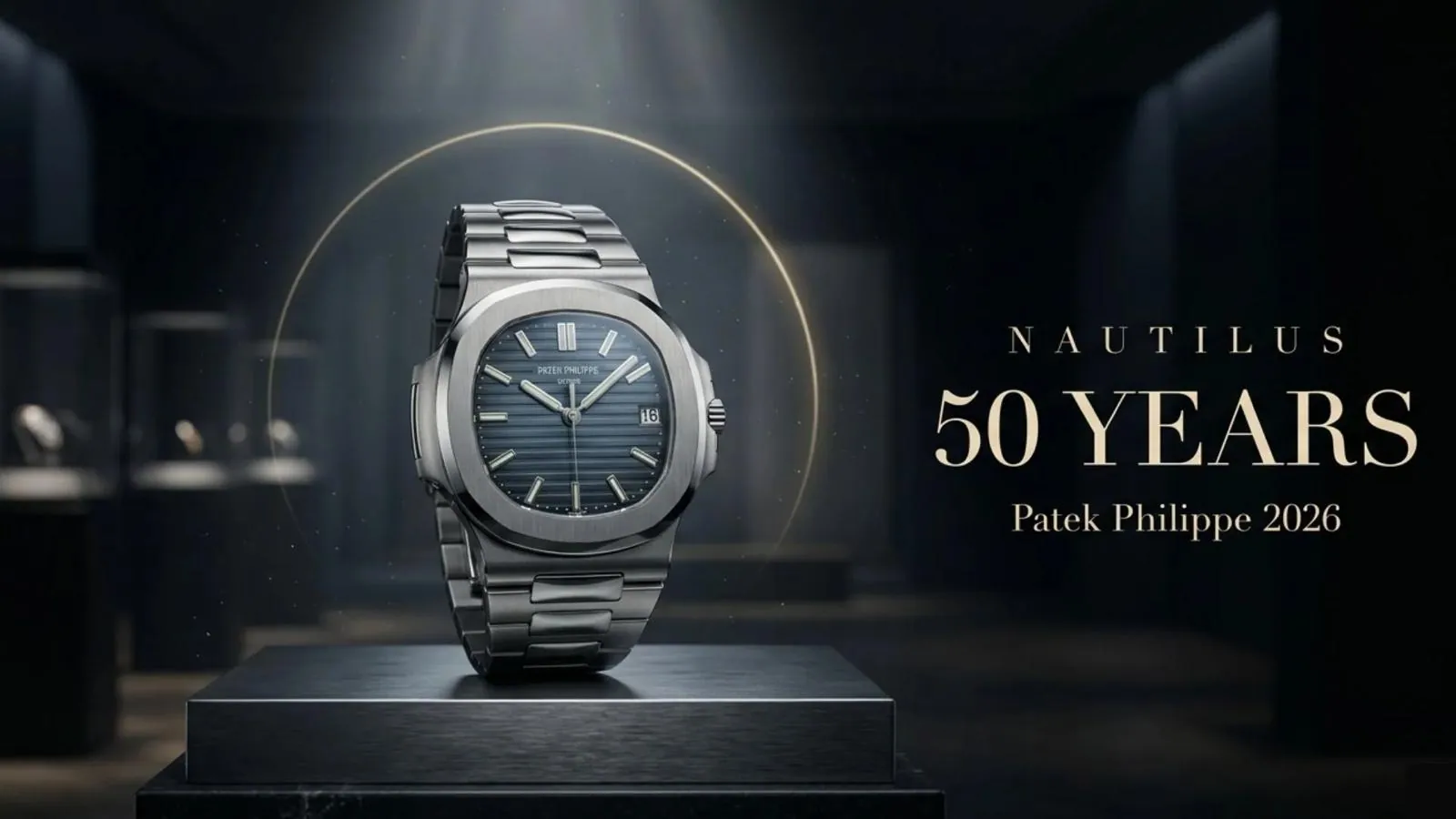
Half a century on from Genta's porthole sketch, the 5711 line is the most requested steel watch we are asked to source. A look at why the waiting list outlived the reference itself.
The story begins with a sketch made over lunch. Gérald Genta, already the author of the Royal Oak, is said to have drawn the Nautilus in a Basel restaurant in 1974 while watching a table of Patek Philippe executives across the room. What he drew was not a watch face but a shape: the hinged porthole of a transatlantic liner, with two ears at three and nine o'clock where the hinge and the locking lever would sit.
It reached the public in 1976 as reference 3700/1A. At 42 millimetres it was enormous for its day, and collectors named it the Jumbo. The case was built in two parts rather than the usual three, sealed against a gasket compressed by those side ears, and rated to 120 metres — a genuine figure at a time when most dress watches surrendered to a splash. The dial carried the horizontal embossing the line has never given up.
The provocation was the price. A steel sports watch from a house that made minute repeaters cost roughly what a gold Calatrava cost, and Patek did not apologise for it. The advertising said so out loud: one of the world's costliest watches is made of steel. In 1976 that read as arrogance. It has since read as the founding statement of an entire category.
The line then spent thirty years being quietly unfashionable. The 3800 arrived in 1981 at a more wearable 37.5 millimetres and sold steadily without ever being difficult to buy. Through the 1990s a steel Nautilus sat in cases at close to list price, and dealers who now field weekly requests for one were, at the time, discounting them.
What changed was the 5711, introduced in 2006 for the line's thirtieth anniversary. It reduced the case to a little under 40 millimetres, kept the ears and the embossed dial, and arrived precisely as the market for steel sports watches from traditional houses began to run. Demand outgrew production, waiting lists became years long, and by the late 2010s the secondary price of a 5711 was several times its retail price — a spread Patek made no secret of disliking.
In 2021 the house did something unusual: it stopped. Thierry Stern discontinued the blue-dialled steel 5711 at the height of its demand, released a green-dialled farewell edition, and closed the reference. That December a Tiffany-blue 5711 made for Tiffany & Co.'s 170th anniversary sold at auction for 6.5 million dollars, with the proceeds going to charity. A steel watch with a date window had become one of the most expensive wristwatches ever sold at auction.
The 5811 followed in 2022 in white gold at 41 millimetres, and the ears — for the first time — were made separately and attached. Purists noticed. Nobody stopped asking for a steel one.
Fifty years on, the thing worth understanding about the Nautilus is that its scarcity is not a marketing device but the consequence of a house that will not raise output. Patek makes on the order of seventy thousand watches a year across every collection, against demand that would absorb several times that. The waiting list has outlived the reference it formed around because the constraint was never the reference.
What that means for a buyer is simple enough. A 3700 or an early 3800 is a collector's purchase, judged on originality: unpolished ears, a correct dial, the right bracelet stretch. A 5711 is a market instrument, priced on sentiment and traded accordingly. If you are buying to wear rather than to hold, the 3800 remains the most underappreciated way into the line — and the one we are most often able to find.
Questions about a specific reference? Ask us directly.